The Complete Guide to EV Charger Installation at Home
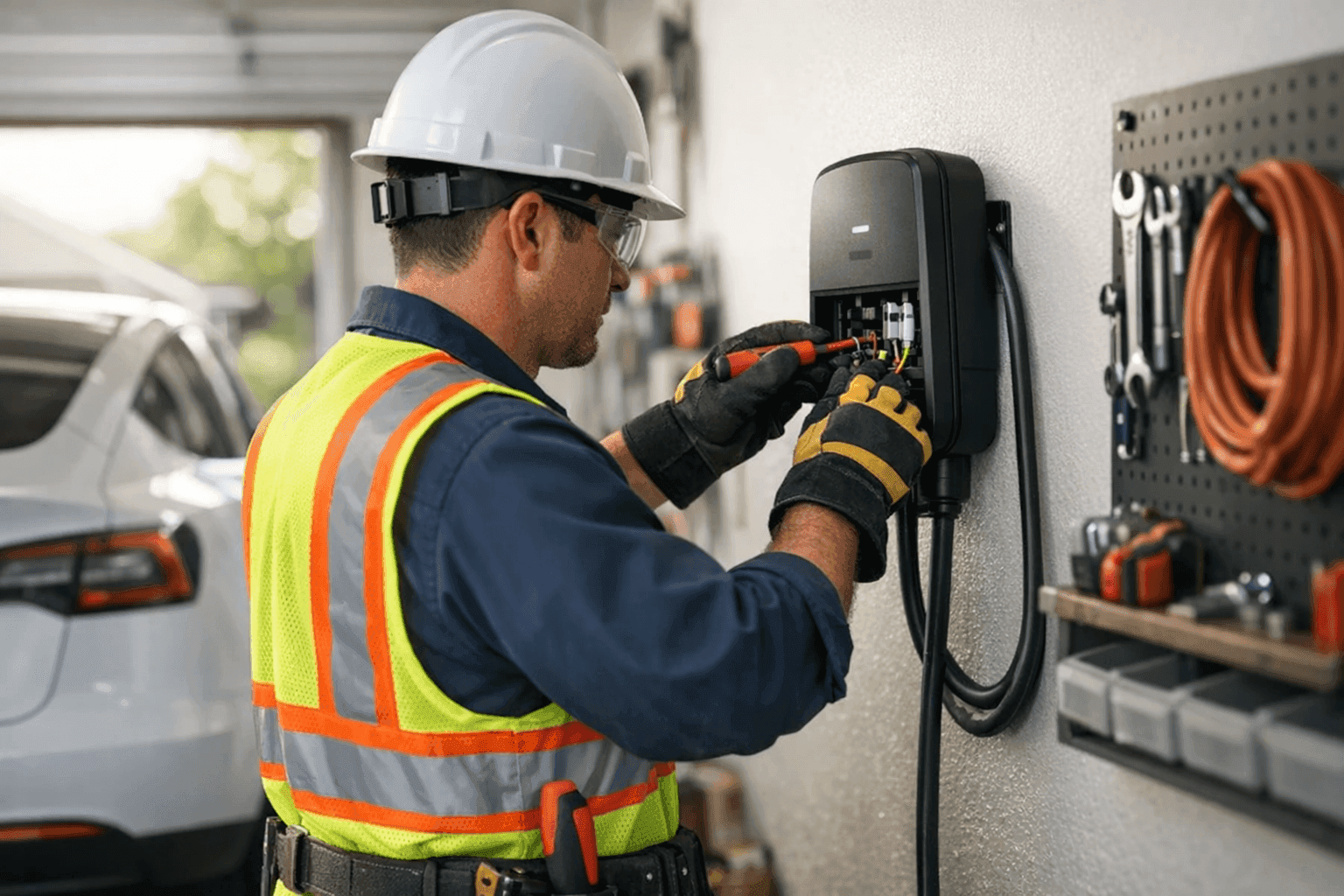
Are you ready to charge your electric vehicle right at home? The convenience is unbeatable—no more racing to public stations or waiting in line. But the process involves more than just plugging in. Your home’s electrical system must rise to the challenge, and safety is non-negotiable.
At Lighteq Electric, we get the excitement and the questions. Will your panel handle the load? What’s the safest charger for your family? This guide delivers the facts, straight from seasoned electricians who install EV chargers every week. Let’s make your home charging journey simple, safe, and efficient.
Types of EV Chargers: Finding the Right Fit ⚡
Not all chargers are created equal. Think of them as different sizes of watering cans—some sprinkle slowly, others pour fast.
- Level 1 Chargers: Use a standard 120V outlet. Slow—adds about 4–5 miles of range per hour. Best for overnight charging, but may not keep up with daily drivers.
- Level 2 Chargers: Need a 240V outlet, like a dryer plug. Much faster—typically 20–40 miles of range per hour. Most homeowners choose this for speed and convenience.
- Level 3 (DC Fast Chargers): Rare for homes due to high cost and power needs. Mainly for commercial or public use.
Most residential EV owners opt for Level 2. It balances speed, cost, and practicality, charging most cars fully overnight.
Understanding Charging Speeds and What Affects Them
Charging speed isn’t just about the charger. It’s the dance between your vehicle, the charger, and your home’s wiring.
- Car’s onboard charger: Some EVs cap the maximum rate.
- Circuit amperage: More amps = faster charging, but your home panel must support it.
- Wiring length/quality: Longer or thinner wires can cause voltage drops, slowing charging.
A licensed electrician can help you pick the right amperage and avoid costly do-overs.
Electrical Requirements: What Does Your Home Need?
Before installation, it’s crucial to check if your home’s electrical system is compatible.
- Dedicated 240V Circuit: Level 2 chargers demand their own circuit.
- Breaker Panel Capacity: Your panel must have space and enough amperage. Old homes may need a panel upgrade.
- Proper Outlets & Switches: Safe, code-compliant connections. No shortcuts.
Our team checks all these—no guesswork, just honest answers.
The Installation Process: Step by Step
Here’s what to expect when you call a seasoned electrician:
- Site Assessment: We visit your home, inspect your panel, and plan the best charger location.
- Permitting: Pulling local permits ensures code compliance—this is not a corner to cut.
- Panel and Wiring Work: If your panel needs an upgrade, we’ll handle it. New wiring is run to the charger spot.
- Charger Mounting and Hookup: We securely install the charger, connect wiring, and test everything.
- Inspection: An official check ensures safety and code compliance.
Smooth, safe, and built to last.
Panel Upgrades: Future-Proofing Your Home
Electric vehicles are just the beginning. As more homes add heat pumps, smart appliances, and battery storage, panels installed today need to handle tomorrow.
- Modern 200A panels support most EV chargers and future tech.
- Planning for expansion now saves headaches later.
Ask about our Electrical System Installation service to see if your panel is ready.
Safety and Permitting: More Than a Checkbox 🛡️
EV charger installations must follow the National Electrical Code (NEC) and local rules. Permits aren’t paperwork—they’re protection.
- GFCI Protection: Prevents shocks near water or in garages.
- Proper labeling: Makes future repairs safer.
- City inspections: Ensure everything meets code.
Cutting corners can lead to fire hazards, insurance issues, or failed inspections.
DIY vs. Professional Installation: The Risks
Installing a Level 2 charger isn’t like plugging in a toaster. It’s more like adding a new branch to your home’s heart—the electrical panel.
- Mistakes can cause fires, shocks, or damage your car’s battery.
- Only a licensed electrician can guarantee code compliance and safe operation.
Ready for professional help? Our EV Chargers installation is tailored for homeowners like you.
What to Expect When Your Electrician Arrives
Here’s how the process feels with Lighteq Electric:
- Walkthrough and Q&A. We want to know your driving habits and future plans.
- Clear, upfront explanation of costs and timing.
- Minimal disruption—most jobs finish in a day.
We treat your home with respect and leave every site cleaner than we found it.
Maintenance Tips: Keep Your Charger Running Smoothly 🧰
EV chargers are reliable, but a few habits keep them in peak shape:
- Regular Visual Checks: Look for wear, frayed cords, or loose plugs.
- Clean the Unit: Wipe dust and debris—never spray water directly.
- Annual Safety Inspection: Have an electrician check connections, especially after storms or power surges.
Ask us about scheduled Outlets & Switches checks while we’re onsite.
Signs of Trouble: When to Call for Repairs
Watch for these red flags:
- Charger won’t power on, or trips your breaker.
- Burning smells, buzzing, or heat from the unit.
- Error codes or flashing lights.
Don’t wait. Electrical issues can escalate quickly.
Common Mistakes Homeowners Make
- DIY wiring: Even skilled handypeople can miss hidden hazards.
- Ignoring permits: Skipping official steps can void insurance.
- Choosing undersized wiring: Slows charging, risks overheating.
A licensed electrician prevents these pitfalls.
Costs: What Should You Budget?
Costs vary, but here’s a rough breakdown:
- Charger hardware: $400–$1,000+ depending on brand/features.
- Installation labor: $600–$2,000 for most homes. Panel upgrades or long wire runs add to costs.
- Permits/inspection: Often $50–$300, depending on your city.
We provide clear, up-front quotes so there are no surprises.
Timeline & Disruption: How Long Does It Take?
Most installs take half a day to a full day. Panel upgrades or tricky wiring may add time. Our team works efficiently to minimize any disruption to your daily life.
Maximizing Safety and Efficiency: Pro Tips
- Charge during off-peak hours if your utility offers cheaper rates.
- Install surge protection to safeguard your charger and vehicle.
- Future-proof with smart chargers that offer app control and scheduling.
Our licensed electricians follow the latest codes and best practices—from Pool & Spa Electrical near you, to advanced EV charging.
Code Compliance: Why It Matters
The National Electrical Code (NEC) and your local city’s rules are there for a reason—to prevent fires and protect your investment. Always verify your installer is certified and up-to-date on requirements. For questions, check resources like the National Fire Protection Association (NFPA).
Frequently Asked Questions
Q: Can I use my dryer outlet for EV charging?
A: Sometimes, but it’s not ideal. Shared circuits can overload and are rarely code-compliant for permanent use.
Q: Will charging at home increase my power bill a lot?
A: Yes, but most drivers find the cost per mile is still lower than gas. Charging overnight often takes advantage of lower rates.
Q: Is outside installation okay?
A: Absolutely. Weatherproof chargers and enclosures are available. We’ll recommend the best fit for your home.
Seasonal Considerations
Cold weather can slow charging and reduce range. Hot garages can stress equipment. Annual checks before winter and summer keep everything humming.
Why Choose a Certified Installer for Your EV Charger?
Certified electricians stay current on technology, safety codes, and best practices. Lighteq Electric brings experience from hundreds of residential installs, from Electrical System Installation to smart home upgrades.
Ready to Charge Ahead?
Choosing the right EV charger and installation team protects your home and your vehicle. From the first call to the final inspection, Lighteq Electric ensures every step is safe, efficient, and future-ready.
Call Lighteq Electric now — or reach us anytime at 855-552-3493 .