How to Safeguard Your Home During Storms and Power Surges
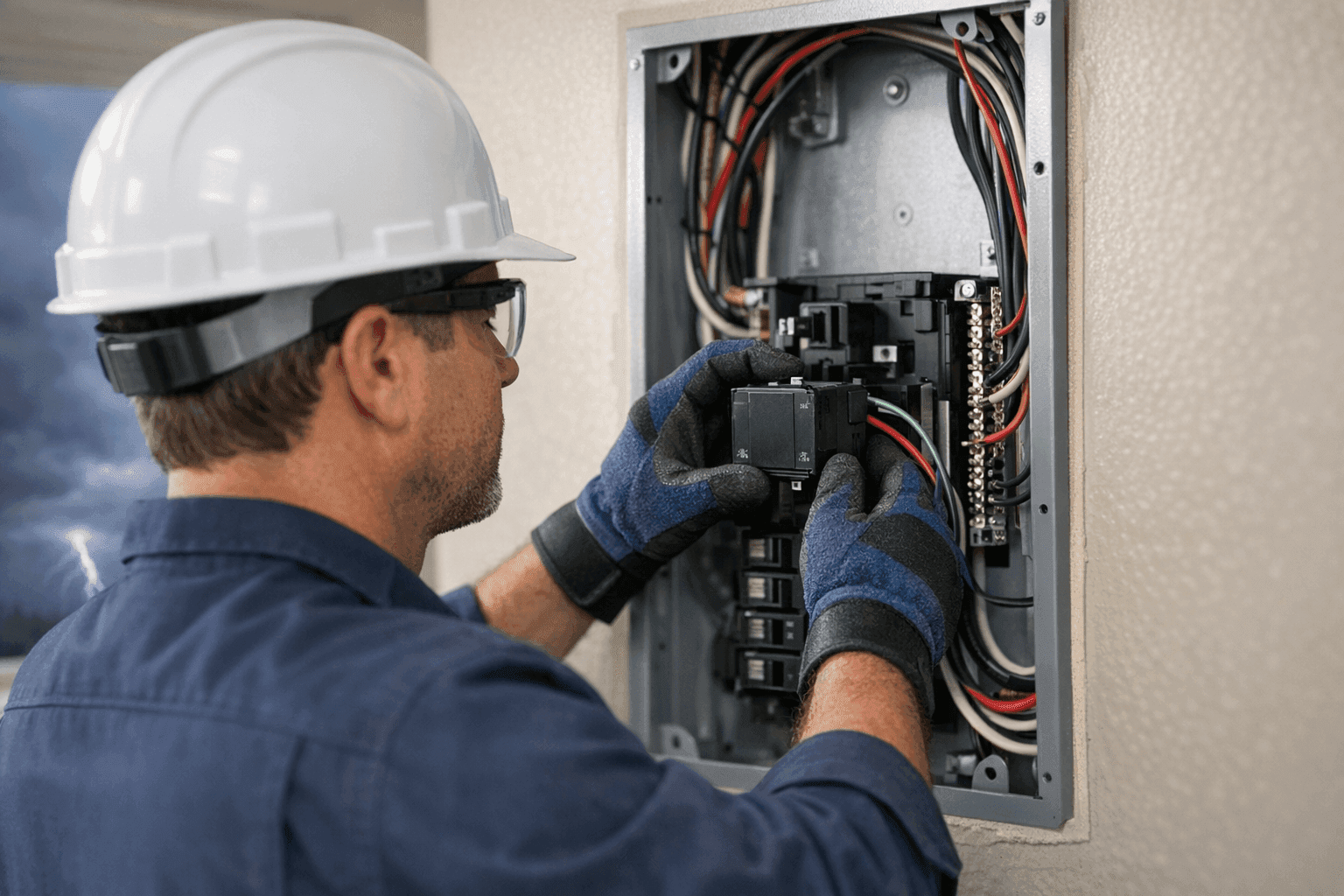
When the sky darkens, thunder rumbles, and rain starts to pound, your home’s electrical system faces real danger. Storms aren’t just noisy—they’re unpredictable, and the sudden jolt of a power surge can leave behind more than just flickering lights.
At Lighteq Electric, we see the aftermath far too often: ruined appliances, tripped breakers, and anxious homeowners. The good news? With the right steps, you can shield your home and your peace of mind.
How Storms Cause Power Surges ⚡
Picture electricity like water flowing through pipes. A storm is a sudden, violent pressure spike—too much, too fast. Lightning strikes aren’t the only culprit. Downed power lines, transformer failures, and even the grid’s recovery efforts can send a wave of electricity surging into your home.
Why does it matter?
- Power surges can fry sensitive electronics in a blink.
- They can damage wiring inside your walls—often invisible until something fails.
- Even small, repeated surges shorten the life of appliances, HVAC systems, and anything plugged in.
According to the National Fire Protection Association (NFPA), electrical failures or malfunctions are a leading cause of home fires. Surges can trigger faults and overheat wires, setting the stage for disaster. That’s why surge protection isn’t a luxury—it’s a necessity.
Surge Protectors vs. Suppressors: What’s the Difference?
Ever heard people use “surge protector” and “surge suppressor” like they’re the same thing? It’s easy to get mixed up.
- Surge Protectors: These are devices (often strips) that guard your gadgets by diverting excess voltage away. Handy for computers or TVs, but not enough for your whole house.
- Surge Suppressors: A broader term that includes protectors but also refers to devices installed at your panel. These intercept surges before they reach your home circuits.
The Real Shield: Whole-home surge protection stands guard at your electrical panel. It’s like a goalie for your wiring, stopping surges at the door. For the best defense, combine a whole-house unit with point-of-use protectors.
Learn more about surge protection and why it’s a key service for modern homes.
What to Do Before a Storm
Preparation starts before the clouds gather. Here’s how to get your home storm-ready:
- Unplug non-essential electronics (TVs, computers, gaming consoles) if a major storm is forecast.
- Test smoke and carbon monoxide detectors to ensure they’re working—storm outages can trigger hidden dangers.
- Check your backup generator. Make sure it’s fueled, oiled, and ready to run if the power drops.
- Review your surge protection. Has it been inspected by a licensed electrician in the past year?
- Trim trees near power lines. Falling branches are a top cause of storm surges and outages.
Pro tip: If you’re unsure about your wiring or surge system, call a professional for a quick safety check. Don’t wait until the storm is overhead.
After-Storm Safety Checks 🌧️
Once the clouds clear, don’t rush to plug everything back in. Surges can leave hidden scars.
- Visually inspect outlets and switches. Look for scorch marks, buzzing, or plastic smells.
- Turn electronics on one at a time. Listen for odd noises or flickering screens.
- Check your breaker panel. Any tripped breakers, burnt smells, or loose wiring? Time to make a call.
- Test GFCIs and AFCIs. These outlets and breakers are your last line of defense against shock and fire.
If you notice anything off, reach out for Emergency Service right away. Quick action prevents small issues from becoming big, expensive problems.
The Hidden Dangers of Power Surges
Not every surge comes from a thunderstorm. Everyday actions—like large appliances cycling on and off—can send ripples through your wiring. Over time, these micro-surges are like tiny cracks in a dam, weakening your system.
Common risks:
- Home office equipment damage
- Data loss from sudden shutdowns
- Dimming or flickering lights
- Unexplained circuit breaker trips
The best defense? Certified, professionally installed protection. Lighteq Electric’s team follows the latest National Electrical Code (NEC) guidelines, ensuring your home meets the highest safety standards.
Why Whole-Home Surge Protection is Worth It
Think of a whole-home surge protector as a security guard for your electrical panel. It stops the big waves before they reach your most valuable devices.
Benefits:
- Shields every outlet, appliance, and switch at once
- Reduces risk of electrical fires
- Protects your investment in smart home tech, HVAC, and kitchen appliances
- Works hand-in-hand with point-of-use protectors for layered defense
It’s not just about peace of mind—it’s about real savings in the long run.
Generators: Your Backup Plan
Even the best surge protector can’t keep the lights on when the grid goes down. That’s where generators shine.
- Portable generators are great for short outages and a few appliances.
- Standby (whole-home) generators kick in automatically, keeping essential systems running—including sump pumps, medical devices, and refrigerators.
If you rely on medical equipment or work from home, a generator isn’t a luxury, it’s a lifeline. Regular maintenance and proper installation are vital. For generator setup and service, see our Generators page.
Electrical Safety Inspections: The Pro’s Toolkit
A certified electrician uses specialized tools—infrared cameras, circuit testers, and years of experience—to spot hidden hazards.
During an inspection, we:
- Look for outdated or overloaded wiring
- Test every outlet and switch
- Check surge protection and grounding
- Inspect your generator and backup systems
Annual inspections are recommended by the Electrical Safety Foundation International (ESFI), especially in storm-prone regions.
Quick Safety Checklist for Homeowners
- Unplug electronics before storms
- Install or upgrade whole-house surge protection
- Test smoke and carbon monoxide detectors monthly
- Schedule a yearly electrical safety inspection
- Keep your generator serviced and ready
Simple habits. Big difference.
DIY vs. Call a Pro: Where to Draw the Line
Changing a light bulb? Go for it. Installing a surge protector at your main panel? That’s a job for a licensed electrician.
DIY is OK for:
- Plug-in surge strips
- Testing detectors
- Resetting tripped breakers
Call a pro for:
- Panel upgrades
- Whole-house surge installation
- Generator connections
- High-voltage work
Working with electricity is like playing with fire—it’s safe in the right hands, but risky otherwise.
Signs Your Electrical System Needs Help
Don’t ignore these red flags:
- Unusual buzzing or crackling sounds
- Warm or discolored outlets
- Lights dimming when appliances start
- Frequent breaker trips
- Burning smell near your panel
If you notice any of these, it’s time for a professional safety check.
Timeline & Disruption: What to Expect
Most surge protector installs or inspections take just a few hours. We coordinate with your schedule to keep downtime minimal. For more complex projects like generator installs, expect a day or two, with clear updates at every step.
Costs & Value: Investing in Safety
Protecting your home isn’t just about up-front costs—it’s about avoiding expensive repairs and replacements. According to the U.S. Department of Energy, surge protection can save thousands over the lifetime of your electronics and appliances.
When It’s an Emergency
If you smell burning, see smoke, or lose power during a storm, don’t take chances. Exit safely and call an electrician immediately. Fast response can save your home and your family.
Looking for an electrician company you can trust after a storm? Lighteq Electric is here for you, day or night.
Common Mistakes to Avoid
- Relying only on power strips (not enough for big surges)
- Skipping annual inspections
- Ignoring warning signs (buzzing, flickering, tripped breakers)
- DIY wiring or panel work
Stay safe—leave complex jobs to the pros.
Prevention & Maintenance: Your Seasonal Routine
Every season brings new risks. In spring, storms spike. Summer brings heat and surges. Fall and winter can mean ice storms and outages.
- Set reminders for annual inspections
- Test GFCIs and AFCIs after severe weather
- Review your generator’s fuel and battery monthly
A little prevention goes a long way.
FAQ: Your Storm & Surge Questions
Q: Will a whole-home surge protector stop every surge?
A: It stops most incoming surges, but layered protection—including plug-in strips—offers the best safety.
Q: How long does surge protection equipment last?
A: Most units need inspection or replacement every 3–5 years, depending on manufacturer and storm activity.
Q: Do I need a generator if I have surge protection?
A: Yes. Surge protectors guard against voltage spikes, but only a generator keeps power flowing during outages.
Ready to Protect Your Home?
Storms are part of life—but damage doesn’t have to be. With certified surge protection, smart prep, and regular inspections, you can keep your home safe and your family comfortable, no matter the weather.
Call Lighteq Electric now — or reach us anytime at 855-552-3493 .