How to Safely Install and Maintain Pool and Spa Electrical Systems
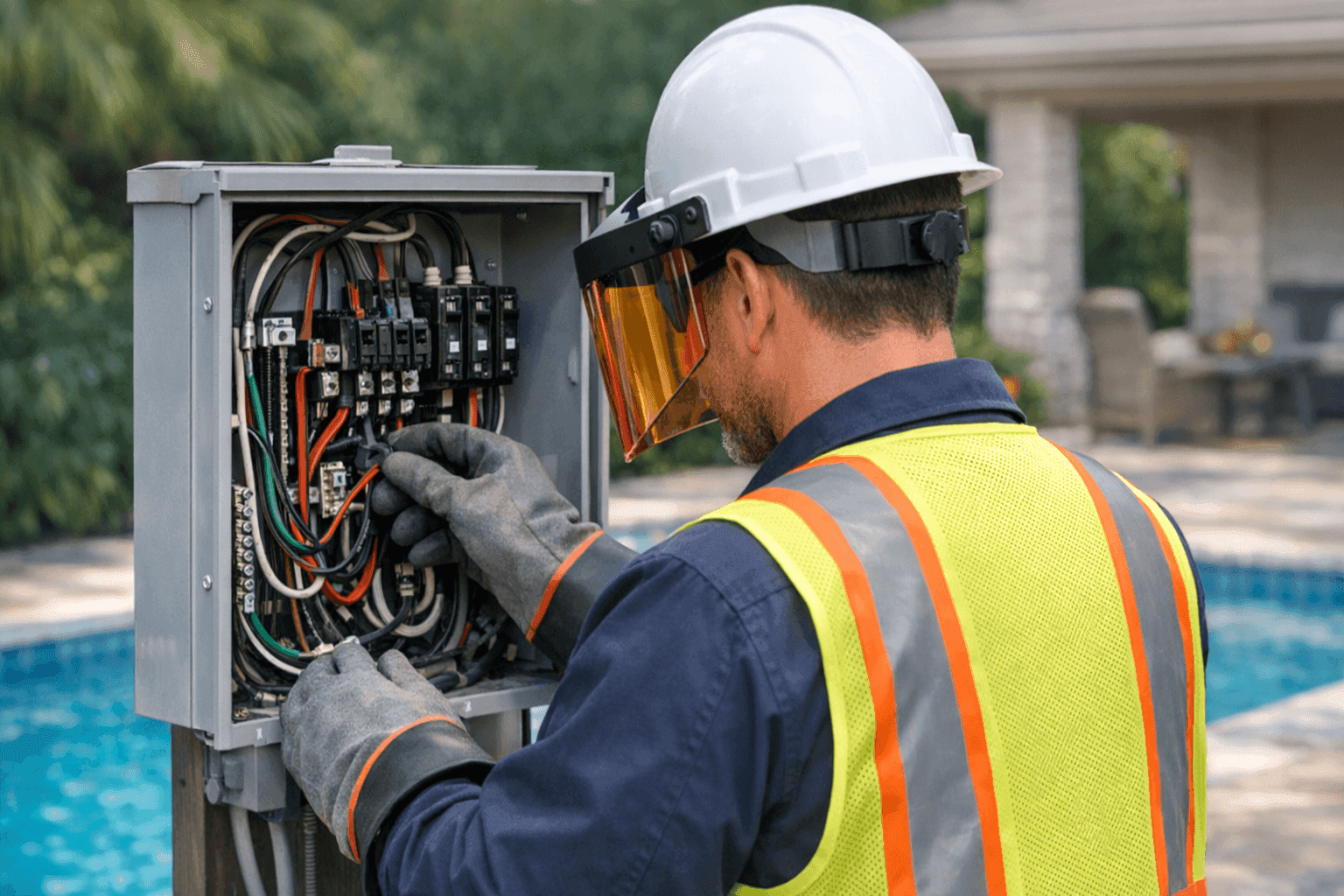
Summer afternoons by the pool are meant for laughter, not worry. But behind every splash and soak, safe electrical systems work quietly to keep your fun uninterrupted—and your family protected.
At Lighteq Electric, we know the hidden wiring, blinking lights, and humming pumps that make backyard pools and spas inviting. We’re here to help you keep them safe, efficient, and up to code.
Pool and Spa Electrical Basics 🏊
Water and electricity don’t mix. That’s rule number one. But every pool and spa needs electrical power—whether it’s for pumps, lights, or heaters.
Here’s what you need to know:
- Dedicated Circuits: Pool and spa equipment must have their own circuits, separate from the rest of your home.
- Weatherproofing: All electrical components should be designed for outdoor, wet environments.
- Proper Placement: Outlets, switches, and panels must be placed a safe distance from water, as outlined by the National Electrical Code (NEC).
If you’re unsure about your setup, it’s best to consult a certified electrician who’s familiar with Pool & Spa Electrical.
GFCI and Bonding Requirements
Ever wonder why your outdoor outlets have that little “reset” button? That’s a Ground Fault Circuit Interrupter (GFCI). It’s one of the most important safety features for any pool or spa.
- GFCIs: These devices instantly shut off power if they detect a current leak—like if electricity is traveling somewhere unexpected (like water).
- Bonding: All metal parts around the pool—ladders, lights, pumps—must be bonded together and connected to the earth. This prevents dangerous voltage differences.
The NEC and local codes spell out exact requirements. Don’t cut corners. Faulty bonding or missing GFCIs can mean a shock risk.
Step-by-Step: Installing Pool and Spa Electrical Systems
Installing pool or spa wiring isn’t a weekend project—it’s more like building the backbone of your backyard oasis.
Here’s a simplified overview of what’s involved:
-
Planning and Permits
- Map out where pumps, lights, and outlets will go.
- Obtain permits. Most cities require inspection.
-
Trenching and Conduit
- Dig trenches for wiring—usually at least 18 inches deep.
- Use rigid, waterproof conduit to protect wires.
-
Panel and Breaker Installation
- Install a sub-panel near the pool, with GFCI breakers.
- Label each circuit clearly.
-
Wiring and Bonding
- Pull wires through conduit.
- Bond all metal parts and connect to grounding rods.
-
Outlet and Switch Placement
- Mount weatherproof outlets and switches a safe distance from water (usually 6–10 feet).
- Install GFCI-protected Outlets & Switches.
-
Equipment Hookup
- Connect pumps, heaters, and lights according to manufacturer specs.
- Double-check load calculations—don’t overload circuits.
-
Inspection and Testing
- Have a licensed electrician test the system.
- Schedule final inspection by local authorities.
Quick Safety Checklist
Before you open the pool for the season—or after any backyard storm—run through this basic safety list:
- Are all outlets and switches protected by GFCIs?
- Do covers and seals look intact?
- Are there any exposed wires or corrosion?
- Is the main disconnect easily accessible?
- When was your last professional Safety Check?
DIY vs. Call a Pro
Some jobs are perfect for DIY. Pool electrical isn’t one of them.
Why?
- Code Complexity: Local and national codes are strict. Miss a detail, and you could put your safety at risk.
- Hidden Hazards: Underground wiring, water leaks, and aging equipment can be tricky to diagnose.
- Insurance: Improper installation may void your homeowner’s policy.
If you ever have doubts, call a licensed electrician familiar with pool and spa systems.
What Pros Do On Arrival
When you call Lighteq Electric, here’s what you can expect:
- Visual Inspection: We look for damaged wires, improper bonding, and signs of corrosion.
- Testing: Specialized tools check GFCIs, breakers, and voltage.
- Code Verification: We verify everything meets NEC and local requirements.
- Clear Reporting: You get a simple rundown—what’s safe, what’s not, and what to fix.
Prevention and Maintenance
A little proactive care keeps backyard fun safe all season.
- Schedule professional inspections every spring.
- Replace any cracked or missing outlet covers.
- Tighten loose connections in panels or breaker boxes.
- Keep landscaping clear around electrical panels.
- Have GFCIs and bonding checked yearly.
Routine Safety Checks are the best insurance against hidden electrical hazards.
Costs and Time Factors
How much will it cost? How long will it take?
- Installation: New pool electrical can take 1–3 days, depending on complexity.
- Repairs: Minor fixes might be done in a few hours.
- Inspections: Usually under an hour—well worth it for peace of mind.
Costs depend on materials, local code, and access. Skimping never pays. Quality wiring lasts for decades.
When It’s an Emergency
Call for help—immediately—if you notice:
- Burning smells or smoke near pool equipment
- Sparking outlets or panels
- Repeated breaker trips
- Water pooling around electrical boxes
These are red flags. Don’t take chances. Lighteq Electric offers 24-hour emergency service for pool and spa electrical issues.
Seasonal Considerations
Spring storms. Summer heat. Fall leaves. Winter freeze.
Each season brings unique challenges:
- Spring: Check for water damage and corrosion after winter.
- Summer: Monitor for overheating equipment.
- Fall: Keep leaves and debris away from panels.
- Winter: Shut off and winterize equipment if not in use.
Plan ahead to keep your system safe all year.
Common Mistakes Homeowners Make
- Using indoor-rated outlets or switches outdoors
- Skipping GFCI protection
- Failing to bond all metal parts
- Overloading circuits with too many lights or pumps
- Letting unlicensed handymen do electrical work
Don’t let shortcuts put your family—and your fun—at risk.
Signs of Trouble
How do you know something’s wrong? Watch for:
- Flickering pool lights
- Equipment that won’t start
- Breakers that won’t reset
- Shocks or tingling near water
- Rust or green corrosion on wires or panels
If any of these pop up, call an electrician. Don’t wait for a bigger (and costlier) problem.
Timeline and Disruption: What to Expect
Worried about backyard chaos during electrical work?
- Most installs or repairs are finished in a day or two.
- Trenching and panel work are noisy but localized.
- Your pool may need to be closed for safety.
- We clean up when we’re done—no mess left behind.
A little disruption now means years of safe, reliable pool enjoyment.
Materials and Equipment
Quality counts.
- Use only UL-listed, outdoor-rated materials.
- Insist on weatherproof conduit, boxes, and covers.
- All wiring should be copper, not aluminum.
- Breakers and GFCIs must be sized for your equipment.
Cutting corners on materials can lead to expensive repairs or worse—unsafe conditions.
Frequently Asked Questions
How often should I have my pool electrical inspected?
At least once a year, or any time equipment is replaced or upgraded.
Can I use extension cords for pool equipment?
Never. Extension cords are not rated for wet, outdoor, or permanent use.
Are pool lights safe?
Yes—if installed and maintained correctly, with proper bonding and GFCI protection.
Do I need permits for repairs?
Most electrical work—especially for pools—requires a permit and inspection.
Why Code Compliance Matters
Codes aren’t just red tape. They’re the playbook for safety. The National Electrical Code (NEC) and local building codes are updated for a reason: to prevent accidents, injury, or worse.
Always choose a certified electrician company for pool or spa work. In fact, if you're looking for a reliable electrician in your area, our electrician services are designed with your safety in mind.
Keeping Backyard Fun Safe and Reliable
Pools and spas create memories. But only if they’re safe, reliable, and up to code. Electrical work is the hidden magic that powers it all—and it deserves respect.
If you have questions, need a professional inspection, or want a system upgrade, Lighteq Electric is here to help.
Call Lighteq Electric now — or reach us anytime at 855-552-3493 .